Behavioral Economics
Behavioral Economics has developed into an independent field of study over the past few decades and is now also found within individual subfields of economics, such as Behavioral Finance, Behavioral Macroeconomics, or Behavioral Industrial Organization. What all these approaches have in common is that they are based on a richer understanding of human behavior, going beyond the standard assumption of rationality and self-interest.
Well-known economists from the early days, such as Adam Smith, had already questioned the standard assumptions. However, at that time, there was no convincing alternative model, and in most cases, the standard assumptions provided good predictions and served as the basis for economic policy recommendations. The experimentally discovered "biases"—systematic deviations from the standard assumptions—were the first steps toward behavioral economics, initially undertaken by psychologists. Over time, it became clear that these observed biases were sufficiently systematic to build independent theories of behavior and to offer recommendations on an individual, economic, and political level. These recommendations were increasingly tested in field experiments. In particular, 'behavioral nudging'—influencing behavior without explicitly restricting it—was tested extensively, but has also sparked significant controversy.
Current research questions concern the heterogeneity of preferences and biases—how they differ across cultures and how they have developed over time. And how do they matter? What environments and institutions are most affected by biases, where have these biases a strong impact on welfare? And, of course, which interventions can leverage specific biases to produce positive effects, and what measures can reduce biases where they have negative consequences?
Keynotes
Our keynote lectures provide us spotlight on such topics. Ernst Fehr (University of Zurich) has made seminal contributions to our understanding of social preferences, fairness, reciprocity, and cooperation, helping to broaden the traditional concept of homo economicus. Matthew Rabin (Harvard University) has made fundamental contributions to modeling human behavior, such as reciprocity, risk, or reference points. Ulrike Malmendier (University of California, Berkeley) conducted influential studies on cognitive biases such as time inconsistency or overconfidence in laboratory and field experiments, and most recently on how past experiences shape economic preferences and beliefs.
Monday 14 Sept. / 11:30 Keynote Ernst Fehr
-

Prof. Ernst Fehr
University of Zurich
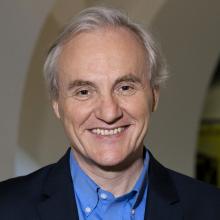
The Fundamental Properties, Stability and Predictive Power of Social Preferences
Parsimony is a desirable feature of economic models but almost all human behaviors are characterized by vast individual variation that appears to defy parsimony. How much parsimony do we need to give up to capture the fundamental aspects of a population’s social and distributional preferences and to maintain high predictive ability? Using a finite mixture approach that makes the trade-off between parsimony and descriptive accuracy explicit, we show that three preference types—an inequality averse, an altruistic type, a predominantly selfish type—capture the essence of behavioral heterogeneity. These types independently emerge in many broad population samples and are strikingly stable over time. They predict laboratory out-of-sample behavior remarkably well and substantially better than a representative agent model and a state-of-the-art machine learning algorithm. In addition, they have also predictive bite in explaining charitable donations, the demand for redistribution and the impact of perceived inequality on this demand. Thus, a model with three stable types captures key characteristics of social and distributional preferences and combines parsimony with predictive ability in a useful way.
Moderation: Jürgen Huber (University of Innsbruck)
Monday 14 Sept. / 14:00 Keynote Matthew Rabin
-
Prof. Matthew Rabin
Harvard University
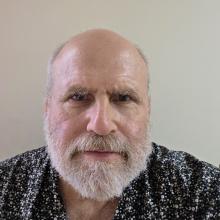
Risky Living
Building from an updated version of the model in Koszegi and Rabin (2009), we consider how news utility and loss aversion influence repeat purchases of drugs, as well as purchases of durable goods. The emphasis is on the dynamics of risk attitudes towards day-to-day consumption uncertainties rather than attitudes towards unexpected, one-shot money gambles. We show that, fixing the intrinsic consumption utility for the consumer, loss aversion predicts a greater taste (1) for purchasing and insuring a meliorative drug than a recreational drug, and (2) for purchasing a durable good that can be re-purchased when it breaks, and that doesn't generate random foreboding over when it may break.
Moderation: Klaus M. Schmidt (LMU Munich)
Wednesday 16 Sept. / 12:00 Keynote Ulrike Malmendier
-
Berkeley_Haas
©Berkeley_Haas
Prof. Ulrike Malmendier
University of California, Berkeley

Experience Effects and Central Banking -- Inflation Expectations, Anchoring, and Policy Rates
Past exposure to inflation has been shown to significantly affect inflation expectations: When forming beliefs, individuals overweight inflation experienced during their lifetimes (Malmendier and Nagel 2016). Experience effects influence even central bankers and predict their hawkish or dovish leanings (Malmendier, Nagel, Yan 2021). These findings cast doubt on the notion of anchored inflation expectations. Empirical evidence such as the declining sensitivity to inflation surprises over time or around the adoption of inflation targeting is commonly attributed to the influence of explicit or implicit inflation targets. In Malmendier and Nagel (2026), we show that this evidence is consistent with experience-based learning, without anchoring to an announced inflation target. Under this interpretation, the prolonged experience of low short-run inflation persistence in the pre-COVID decades has rendered long-run expectations insensitive to inflation surprises, matching the patterns observed in empirical anchoring tests. Experience effects also explain why the decline in surprise sensitivity since the 1980s is strongest among younger individuals and why long-run inflation expectations remained stable in the face of the post-COVID inflation surge. An implication of this interpretation is that new inflationary periods could have strong effects on expectations. Simulations indicate that the sensitivity of long-run expectations to inflation surprises would rise sharply if individuals were to experience another sustained episode of highly persistent inflation. Overall, long-run inflation expectations may be less firmly anchored than commonly believed.
Moderation: Dorothea Kübler (WZB / TU Berlin)
Panel of the Core Conference
Tuesday 15 Sept. / 17:00-18:00
Behavioral economics in action
How are insights from behavioral economics used for giving advice to policy makers, firms, or consumers? In this panel we discuss with behavioral economists who apply their insights in practical settings beyond academia. Which findings are truly generalizable? Are there standard behavioral theories that work well in practice? And what evidence should guide decisions in applied settings?
Moderation: Urs Fischbacher (University of Konstanz)
Panelists:
- Ernst Fehr (University of Zurich)
- Martin Kocher (Österreichische Nationalbank, University of Vienna)
- Ulrike Malmendier (University of California, Berkeley)